Moon Phases and Transits
A Simple New Moon Ritual (and What You Can Skip)
A new Moon ritual needs three things: a cleared surface, one sentence and one small action before bed. It takes fifteen minutes and a pen you already own.

Somewhere in your saved Pins there's a new Moon altar with nine supplies on it: three candles, a sage bundle, a crystal grid, a bowl of something, and a list of rules longer than your lease. Meanwhile you live with thin walls, a smoke alarm that goes off when you make toast, and a roommate who would definitely ask what you're doing.
You can skip almost all of it. A new Moon ritual needs three things: a cleared surface, one sentence, and one small action before bed. It takes fifteen minutes, fits behind a closed bedroom door on a weeknight, and costs nothing beyond a pen you already own. Two weeks later, it gives you something to check.
Why the new Moon is for starting
At the new Moon, the Moon sits in the same part of the sky as the Sun. Its lit side faces the Sun and its night side faces Earth, so you can't see it at all. Over the next two weeks its light grows until it's full. Astrologers read that dark beginning as the start of the month's cycle, the natural time for beginnings and intentions.
The Moon is on the Sun's side of Earth at that point, so every new Moon falls in the same zodiac sign as the Sun and carries that month's sign. A published lunar calendar or astrology app will give you the date and the sign.
A start is something you do, so this ritual ends with a step instead of a wish. That's the whole appeal of a ritual: it turns a date on the calendar into something you did, with a clear beginning and end, on purpose, in a way you'll remember.
The fifteen-minute ritual
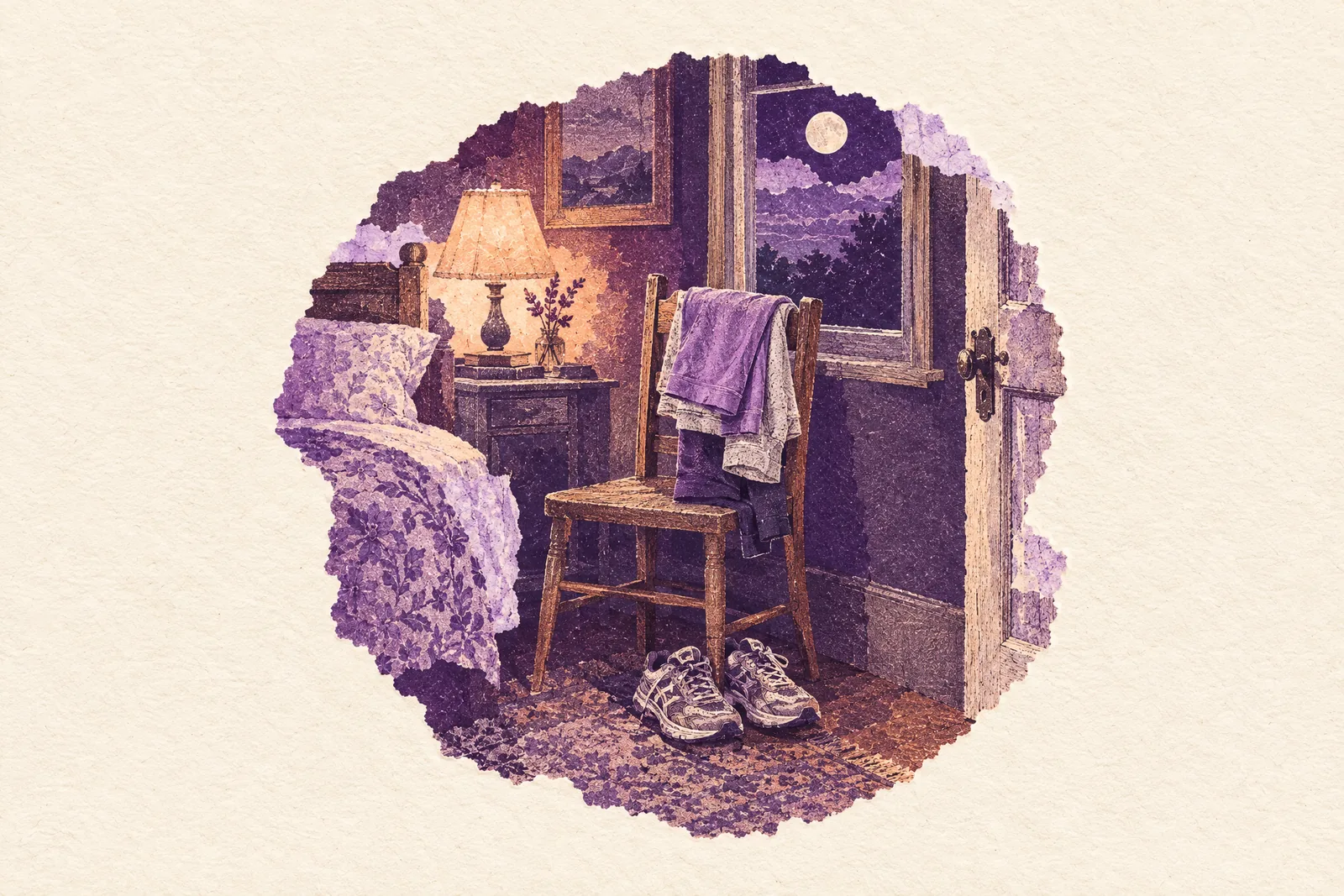
1. Clear one surface (about three minutes)
Pick one surface: the nightstand, a windowsill, the top of the dresser, or the corner of the desk where the mail piles up. Take everything off, wipe it down, and put back only what belongs there. Clear that desk corner and you might see the wood for the first time in weeks. The new Moon is a blank start, and this is the version of it you'll see in the morning. In a shared apartment, stick to your own space and leave everyone else's things exactly where they are.
2. Dim the light and put the phone away (about two minutes)
Overhead light off, one lamp or a string of lights on. It's the dark Moon, and a dim room matches it. The phone goes in another room, or face down and out of reach. If your roommate's show is loud through the wall, headphones with nothing playing work fine. The end of your bed with the door shut and one lamp on is a perfectly good spot.
3. Write one intention (about five minutes)
One sentence, first person, present tense, about something you do. Write it by hand on a scrap of paper, because the paper is the part you keep. Spend the full five minutes on the wording, since a plain sentence you can act on tonight will serve you better than a pretty one.
4. Take the first step tonight (about three minutes)
This is the heart of it. The new Moon is a beginning, a beginning is an action, and so the cycle starts with something done. Make the step tiny and physical: running shoes set by the door, the phone charger moved to the kitchen, tomorrow's clothes laid out, your grandmother's number pinned to the top of your favorites, the first line of a cover letter typed. If your intention is "I send the draft before I polish it," the step might be emailing your manager a messy outline before bed. Do it tonight, even if it takes ninety seconds.
5. Fold it, date it, keep it (about two minutes)
Fold the paper small. On the outside, write the date and the new Moon's sign. Then put it somewhere you'll come across it: on the surface you just cleared, in your wallet, in your phone case, inside the book you're reading. You'll want it again in two weeks.
How to write an intention you can start tonight
Write it as a practice you can start now, in the present tense: "I run before work," instead of "I'm a marathon runner." Keep it about your own actions, and small enough that some piece of it fits before bed. Most first drafts come out as a wish or a complaint, and a quick rewrite turns them into something you do.
| Area | Instead of | Try |
|---|---|---|
| Time | I want to stop being late. | I leave ten minutes before I think I need to. |
| Love | I want to find someone. | I say yes when friends want me to meet someone. |
| Friends | I want my friends to make more effort. | I make the plan for our next dinner. |
| Family | I want to be closer to my family. | I call my grandmother on my walk home. |
| Work | I want a better job. | I spend one hour a week on applications. |
| Home | I want a calmer apartment. | I clear the kitchen counter before bed. |
Then run three quick checks, each a yes or no:
- Is it about something I do?
- Could I do a piece of it tonight?
- Is it one thing?
A no on any of them means rewrite it.
What you can skip
- Buying anything. No kit, no special candles, no sage, no crystals, no new journal. You can get as far as a new Moon kit in your cart and then close the tab, because you already own a pen. Paper and a pen are the whole supply list.
- Fire. No burning the paper, no candles, no incense. An open flame next to loose paper in a small shared apartment is a real fire risk, and a reliable way to meet your smoke alarm again. Folding and keeping the paper works better anyway: burning sends the words away, and keeping them means you can read them at the full Moon.
- Smoke. No sage or smoke cleansing either. The cleared surface already did the clearing.
- Other people. The intention covers your own actions, so leave out names and anything aimed at getting someone to message you, come back, or fall for you. You might start to write his name, stop, and write "I make plans for my weekends" instead. Love intentions describe what you'll do, like "I tell people what I'm looking for."
- The exact minute. The new Moon's date on a lunar calendar is enough, and the evening after works too.
- The list of ten. One intention. The next one can wait for the next new Moon.
- Special words. No chants, scripts, or spells. The sentence you wrote is the whole script.
- Grading it. The ritual marks a start. How it went is something to notice at the full Moon, without a score.
Two weeks later: the full Moon check
The Moon's phases repeat about every 29.5 days, so the full Moon arrives about two weeks after the new one, halfway through the cycle. That's your check-in. Unfold the paper and read it once. Notice what you actually did, even if it was only twice. Maybe the folded square falls out of your wallet at the coffee counter and you realize you've called your grandmother three times.
Then decide. If the sentence still feels like yours, keep it. If it's done, or it no longer fits, tear it up, recycle it, and start fresh at the next new Moon. The full Moon prompts pair nicely with this moment if you want to sit a little longer.
For a longer sit-down at the new Moon itself, the new Moon journal prompts go deeper, and the guide to the new Moon in each sign suggests a focus for each month. The fifteen minutes stand on their own without either.
Get it half done tonight
Whenever the next new Moon falls, you can set it up now. Look up the date, write it on a scrap of paper, and leave the paper and a pen on the surface you plan to clear. When the night arrives, half the ritual is already sitting there waiting, and all that's left is the sentence and the step.