Moon Phases and Transits
Moon Water: How to Make It and Simple Ways to Use It
Moon water is ordinary water set out overnight under a phase you chose, then used in a small ritual. Here's how to make it, use it and keep it safe.
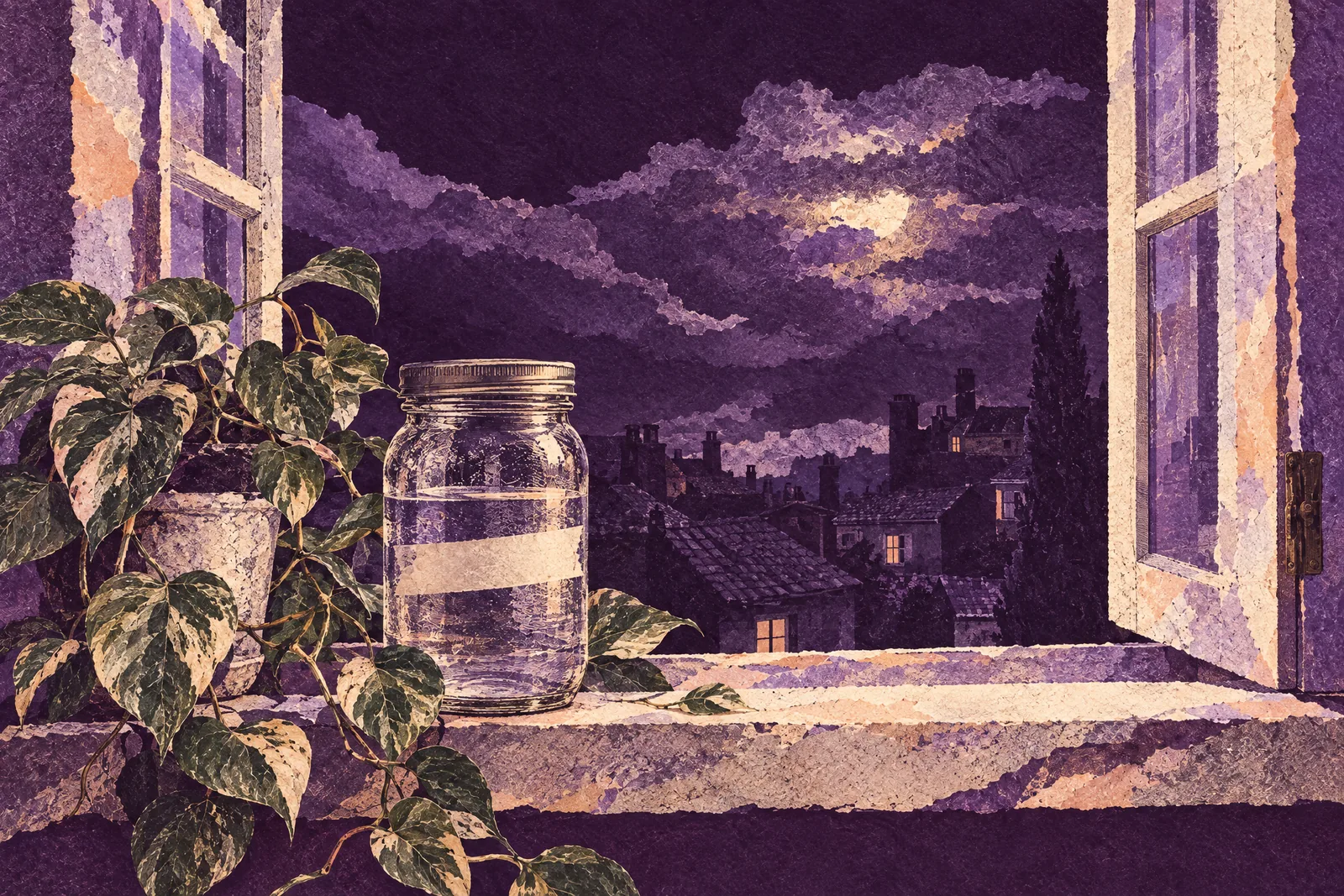
It's cloudy all night. You set the mason jar on the windowsill before bed anyway, and the next morning you bring it in, label side up, knowing exactly which phase was overhead. You don't need to see the Moon to know it was there. That's the whole trick of moon water: it turns a phase you read about in an app into a jar you can hold, label, and use. One night of setting it out, then a small deliberate act with the water after, and the month has a bookmark in it.
What moon water is for
Moon water is ordinary water you leave outside overnight under a phase you chose, then use in a small ritual the next day or two. No special spring, no silver bowl, no elaborate words. The meaning comes from the timing and the intention you attach when you write your one word on the tape. That's it.
Think about what it actually does for you. You set the jar out on an ordinary weeknight, but what you're really marking is the new moon. You bring it in the next morning, and now you have a physical object that carries a date and a feeling. When you water your pothos with it a day later, or wipe your desk before you open a blank document, your brain clocks the shift. Something started. Something's being tended. You don't have to track the whole lunar cycle in your head; the jar does it for you, and you do it back to yourself every time you use it.
Pick your phase
The lunar cycle repeats about every 29.5 days, and each stretch has its own job. Pick the phase that matches what you're marking, and the rest falls into place.
Full moon is the classic. The whole face is lit and it's up from about sunset to sunrise, so the Moon is in the sky the whole time your jar sits out. At the full Moon, the Moon is opposite the Sun and its lit side faces Earth; a full Moon rises around sunset and sets around sunrise.[1] Full moon water suits finishing, thanking, and tidying up once a project wraps. You pour it out, and the stretch is done.
New moon is quieter. The Moon's lit side faces the Sun and its night side faces Earth, so it can't be seen at all. Your jar sits under a dark sky, and that suits a start from nothing. Use new moon water at the beginning of something: a new habit, a new application cycle, a friendship you're planting.
Waxing (crescent to gibbous) is the building stretch, for things you're tending and adjusting mid-way. Waning (gibbous to crescent) is the clearing stretch, for wiping down, reflecting, and wrapping up. A moon calendar or any astrology app will show you which phase you're in tonight.
Let the new or full moon's sign choose the use
Here's the detail that makes each jar feel specific instead of generic. The new Moon is in the same zodiac sign as the Sun, and the full Moon is in the opposite sign. That means every new or full moon carries an element, and that element suggests the best use for your water.
- Earth (Taurus, Virgo, Capricorn): water a plant. Earth signs are about what grows slowly and can be touched, so the pothos on your sill is the natural landing spot.
- Water (Cancer, Scorpio, Pisces): take a bath. Water signs are about feeling and soaking something in, so pour a cupful into warm bathwater and let the word on the label sit with you.
- Air (Gemini, Libra, Aquarius): the desk and the notebook. Ideas and messages live there, so the jar goes in the corner while you write the first line.
- Fire (Aries, Leo, Sagittarius): the launch points. The mirror you get ready in, the shelf by the front door. Fire signs are about going out and starting, so the jar marks the threshold.
Your roommate, your kid brother, and your cat don't need this logic. But when you write "Capricorn new moon" on the tape and water your succulent, you feel the difference between a random watering and a small ceremony.
How to make moon water
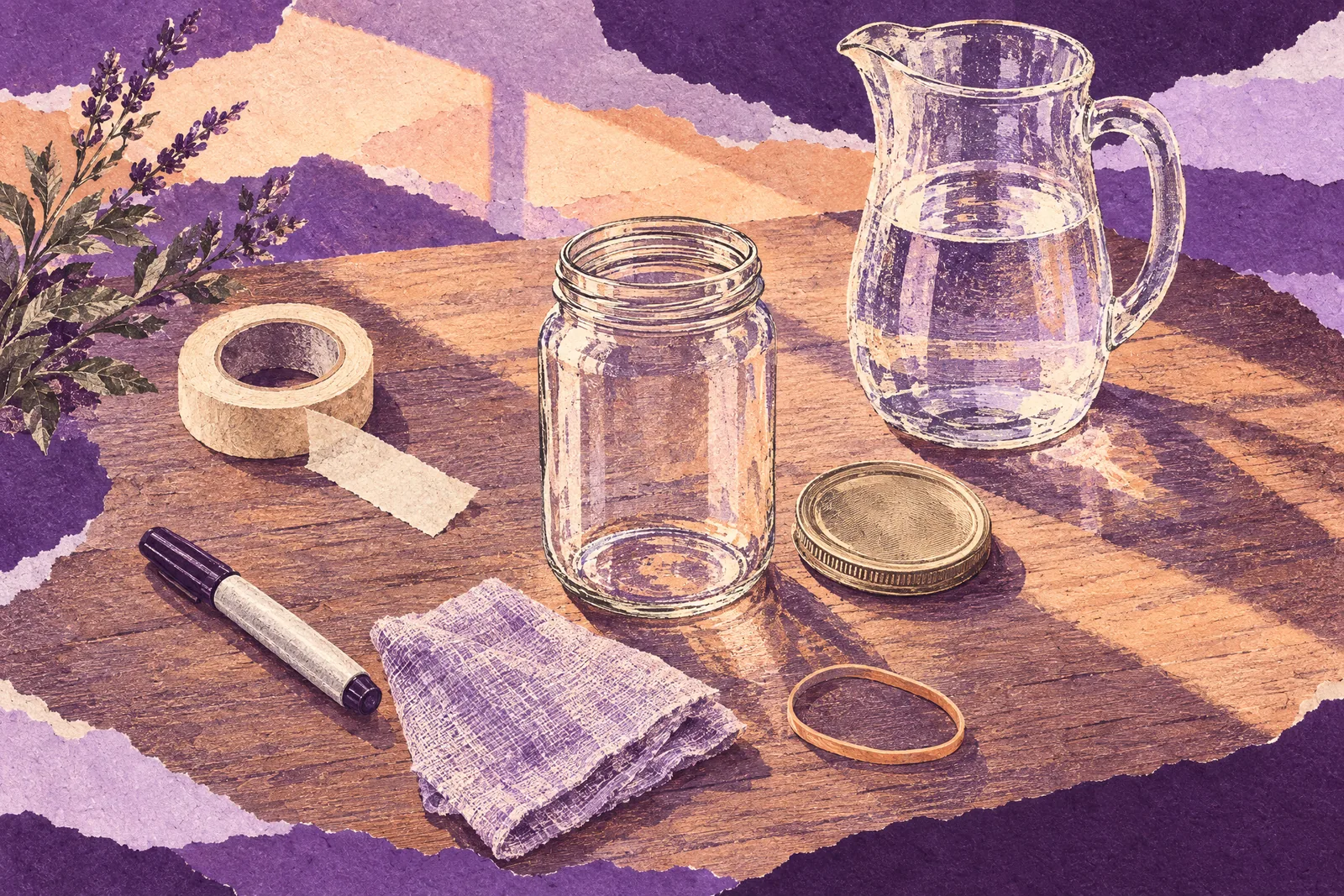
Grab a clean glass jar with a lid. A mason jar works, a cleaned-out salsa jar works, anything with a screw top or a cloth held on with a rubber band. Fill it with tap or filtered water, not much to it.
Tear off a strip of masking tape. Write three things: the phase (new, full, waxing, waning), the sign if it's a new or full moon, and one word. "Begin." "Finish." "Steady." Thick marker so you can read it across the kitchen.
Set the jar out in the evening on a windowsill, a balcony, or a front step where moonlight can reach. Cloudy nights count too, since what you're marking is the phase. Cover the top with the lid or the cloth to keep dust and bugs out.
Bring it in the next morning. Standing water left outside for more than a few days draws mosquitoes, and the CDC advises emptying, covering, or throwing out items that hold water once a week. So once you've used your jar, pour what's left onto a plant or down the sink. Don't store it for weeks. Make a fresh jar next phase.
Four simple ways to use it
A plant that stands for something. Choose one plant to represent what you're growing. Maybe it's the pothos you bought the week you started a new job, and the tape on the jar says "steady." Water it with new moon water, then check in on it at the full moon. Every time you water it, the plant is the reminder. You look at it and remember what you started.
A bath. Pour a cupful into warm bathwater and think of the word on the label. Full moon water suits this especially well: a draining month finally wraps up, so you pour it in, leave your phone in the other room, and soak for fifteen minutes with nothing to fix.
An altar or shelf. Dampen a cloth and wipe the surface before setting out new things: a photo, a tarot card, a stone you picked up on a walk. The wipe-down marks the surface as a place where you're starting something new.
A desk ritual. Before starting a project, wipe down the desk with a damp cloth (never the laptop, never the keyboard), set the jar in the corner, and type or write the first sentence. It takes thirty seconds, and it tells your brain the work has begun. You don't have to wait for motivation; you just have to write the first line.
House rules for moon water
It isn't drinking water. If a roommate could mistake it for kettle water, write MOON WATER, NOT FOR DRINKING on the label in thick marker. Keep the jar away from the kitchen, away from kids and pets, and away from your water bottle. It sat out overnight. It's ritual water. Don't pour it into a drinking glass, an ice tray, or a pet bowl.
Nothing goes in the water. No salt, no oils, no herbs, no crystals dropped in. If you want a crystal nearby, it sits beside the jar on the windowsill. The point is the timing and the use, not a potion.
No candles, no incense, no burning anything near the jar, and no water on electronics. Wipe the desk around your laptop, not across it.
Leftovers get poured out within a few days. Don't build a collection of jars on the shelf. One jar, one use, one fresh jar next time.
Start tonight
Open your astrology app and find the next new or full moon. Pick the one that matches what you're marking: the thing you're starting, the thing you're finishing, the thing you need to feel steady in. Write your one word on a strip of tape tonight, set the jar by the window, and decide right now where the water goes. Plant, bath, shelf, or desk. One use, one jar, one bookmark in the month. Then water the pothos and go to bed.
NASA Science, Moon Phases, phase descriptions for the new Moon and full Moon. ↩︎