Houses
Angular, Succedent, and Cadent Houses: The Three Speeds of Your Chart
Angular houses start things, succedent houses build and keep them, and cadent houses learn and get ready. Three kinds of work, and none of them is weak.

Maybe you saw one of those astrology graphics that sorts planets into "strong" and "weak" based on house placement, and yours landed mostly on the wrong side: five planets in cadent houses. If you've been quietly offended ever since, that reaction makes sense, because the graphic got the whole system wrong.
The twelve houses split into three groups of four, and the groups repeat in a rhythm around the wheel. Angular houses start things and put them in view. Succedent houses build up and keep what got started. Cadent houses learn, adjust, and get ready for the next round. Three kinds of work. Three rhythms. None of them is the weak one.
The three groups at a glance
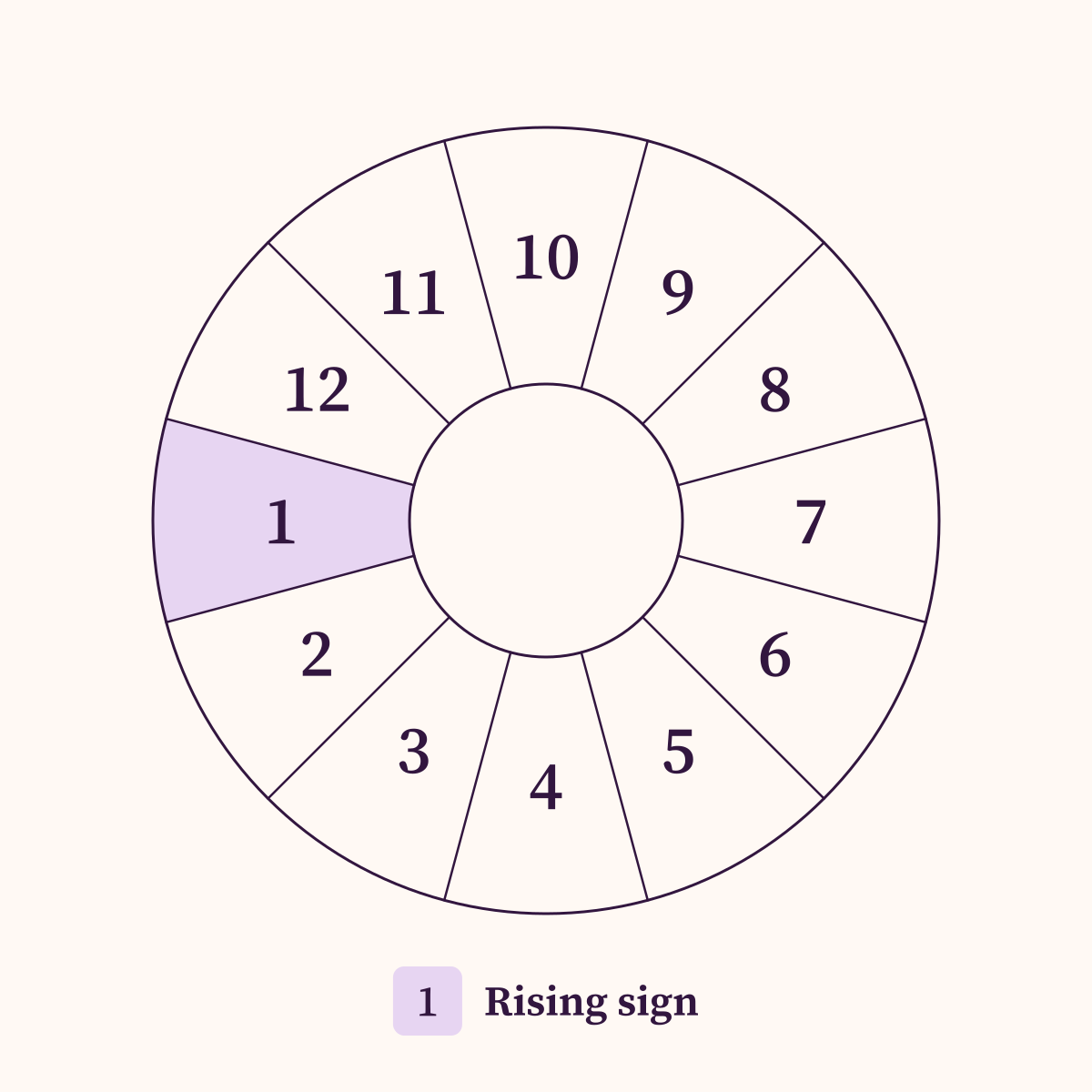
Angular: the 1st, 4th, 7th, and 10th houses. Succedent: the 2nd, 5th, 8th, and 11th houses. Cadent: the 3rd, 6th, 9th, and 12th houses.
Under whole sign houses, where each house is exactly one sign and your rising sign is the whole 1st house, the grouping follows the house numbers straight down the list. So if your rising sign is in Leo, Leo is the 1st (angular), Virgo the 2nd (succedent), Libra the 3rd (cadent), and the pattern keeps repeating until Cancer wraps up the 12th.
Angular houses: where things start and get seen
The 1st, 4th, 7th, and 10th are the load-bearing walls of ordinary life. Me. Home. You. The world. What happens in these houses tends to happen out front, and it sets other things in motion. The move to a new city. The relationship that changes the group dynamic. The job switch that makes your title different on LinkedIn.
The big turns in life tend to come through one of those four doors, out where people can see them. With several angular planets, you live visibly. Decisions about self, home, partnership, and career feel like turning points, and they are, because other people watch you make them. The trade-off is that with too many launches and no tending, nothing gets steady.
Succedent houses: where things get built and kept
The 2nd, 5th, 8th, and 11th each come right after an angular house and gather up what it started. The self collects resources. The home produces pleasure and creative work. The partnership produces shared stakes, the joint account and the lease and the difficult conversations about what's whose. The public role grows a network, a circle of people who show up for your projects and your birthdays.
The savings habit that quietly holds, the best friends who have stayed, the half-finished novel that gets longer and sharper with each pass. Several succedent planets point to a chart that invests, accumulates, and stays. The risk is holding on after something has already run its course, but the capacity to build over ten years is its own quiet superpower.
Cadent houses: where you learn, adjust, and get ready
The 3rd, 6th, 9th, and 12th close each quarter of the chart. This is where experience gets digested: studying the textbook, reorganizing the cleaning routine, reading three books about a belief system you want to understand, taking the solo walk where you sort out what you actually think. You'd rather spend a year learning to do something properly than start before you're ready, and that year of preparation is the work.
Several cadent planets suggest a chart that thinks things through, adapts well, teaches, helps, and prepares carefully. Sometimes so thoroughly that the next beginning keeps getting postponed, which is the one thing to watch. Learning is real work. It just doesn't look like a launch on a social media post.
Start, build, learn, repeat
The pattern runs four times around the wheel: 1-2-3, 4-5-6, 7-8-9, 10-11-12. Each quarter goes start, build, learn, and each cadent house hands off straight into the next angular one. The 3rd's everyday learning feeds the 4th's home and foundations. The 6th's routines and upkeep feed the 7th's partnerships, because you show up better for other people when your laundry and your inbox are handled. The 9th's big-picture study feeds the 10th's public role; what you've read and believed and traveled for shapes what you put out into the world. The 12th's rest and reflection feed the 1st's fresh start, the moment you finally say, "Okay, I'm going to do this differently now."
That handoff shows what the old labels missed. The learning is what makes the next start possible. Without it, you'd be launching on fumes every time.
Where the names (and the "weak planet" idea) come from
The terms are old. Angular houses are named for the chart's angles, the lines drawn from the exact birth moment and place, beginning with the Ascendant in the 1st house. "Succedent" comes from the Latin succedere, "to come after" or "follow after"; the succedent houses are the ones that follow the angular houses.[1] "Cadent" comes from the Latin for "falling" (cadens, from cadere, "to fall"), a translation of the Greek apoklima, "falling" or "decline"; the cadent houses were pictured as falling away from the angles.[2]
Ancient, medieval, and Renaissance astrologers treated angular houses as the most influential and cadent houses as weak; the 17th-century astrologer William Lilly called cadent houses "poor and of little efficacy."[2:1] That was the ranking, stated plainly, a few centuries ago. The reading now is simpler: three kinds of activity, and the so-called weak houses are where learning, daily care, travel, belief, teaching, and rest all live. If that sounds like a lot of your actual life, good. You were never in the weak group. There isn't one.
Cousins of cardinal, fixed, and mutable
Cardinal, fixed, and mutable describe signs, styles of meeting change. Angular, succedent, and cadent describe houses, areas of life grouped by their place on the wheel. The three-beat rhythm is shared, but the subject is different, and the two patterns can run independently.
Here's the proof that sits in every whole sign chart. Under whole sign houses, the four angular houses always hold the four signs of the rising sign's own modality. The succedent houses hold the four signs of the next modality in the order cardinal, fixed, mutable. The cadent houses hold the four signs of the third modality. For a cardinal rising, the patterns line up neatly: angular houses hold cardinal signs, succedent hold fixed, cadent hold mutable.
But for a fixed rising, they don't. A Taurus rising puts the fixed signs in the angular houses (Taurus, Leo, Scorpio, Aquarius in the 1st, 4th, 7th, and 10th) and the cardinal signs in the cadent houses: Cancer in the 3rd, Libra in the 6th, Capricorn in the 9th, Aries in the 12th. So your learning-and-adjusting houses run entirely on starter energy, while your public-facing, launch-ready houses run on persistence. Two layers, read on their own terms. Don't flatten them into each other.
Counting your own planets
With whole sign houses, each planet's house is set by counting how many signs it sits past your rising sign. You can sort your Sun, Moon, and eight planets into the three groups with a pen and a sticky note. Four angular, two succedent, four cadent. A clear cluster, one group holding noticeably more planets than the others, points to the kind of work your chart does most. An even spread means you move easily between starting, building, and learning. An empty group just means that kind of work shows up through the signs and the rest of the chart, with nothing missing. It's a pattern to notice, not a score to chase.
A couple of practical things. House placements hinge on your birth time and location, and without a reliable time they can't be pinned down, so only count the placements you're sure of. And plenty of chart apps default to other house systems, like Placidus, which split the wheel differently, so the same planet can land one house over in another app, and that moves it into a different group too. Count in whole sign houses to keep it consistent, and don't let an app's default settings rearrange your sticky note.
The handoff is the point
Every cadent house leads into an angular one. The learning feeds the start. The rest feeds the becoming. If your chart is heavy in cadent houses, you are the one setting up the next beginning, carefully, thoroughly, with more context than anyone in the room has.
Here's a useful move: find your busiest group, then look at the group it hands off to. Angular hands to succedent, so a chart full of launches needs to ask what gets tended. Succedent hands to cadent, so a chart deep in building needs permission to put the project down and go study something. Cadent hands to angular, so the chart full of learning and preparation gets to trust that the digestion phase is the preparation, and the start is coming.
Online Etymology Dictionary, succeed (v.), entry text. ↩︎
Wikipedia, Cadent house, lead section. ↩︎ ↩︎