Zodiac Guides
The Tarot Card for Every Zodiac Sign (and Where the Pairings Come From)
Your sign's tarot card pictures how it moves, from the Emperor for Aries to the Moon for Pisces. The pairings are late Victorian, from the Golden Dawn.
You take Death out of your deck to show your Scorpio best friend her card, and she goes very quiet. Then you point to the sun rising behind the skeleton and explain that in tarot, Death is the card of change and endings: one chapter closing so the next can start. She looks at it again, differently this time.
Every sign's card works like that. Each one is a picture of how the sign moves. Aries takes charge, Taurus keeps what works, Gemini chooses between two, Libra weighs and then decides, and Scorpio lets go all the way. The list has a real origin too, a fairly recent one, and knowing it turns your card into a deliberate portrait of your sign.
Where the pairings come from
Tarot cards, then called tarocchi, first appeared in Ferrara and Milan in northern Italy in the mid-fifteenth century, and they were first used for playing card games.[1] For a long stretch, that's all they were.
In the 1780s, Antoine Court (known as Court de Gébelin) and Jean-Baptiste Alliette (known as Etteilla) popularized esoteric tarot in Paris and claimed it came from ancient Egypt. Nothing backs that claim up.
The sign pairings came a century later. The Hermetic Order of the Golden Dawn's first temple, Isis-Urania, was founded in London in 1888 by three Freemasons, William Robert Woodman, William Wynn Westcott, and Samuel Liddell Mathers, and its curriculum included the basics of astrology and tarot.[2] The Golden Dawn worked out the correspondences that pair each sign with a card.
Two of its members then put those pairings into the deck you most likely picture when you think of tarot. The Rider-Waite-Smith deck was made to the instructions of A. E. Waite and illustrated by Pamela Colman Smith, both members of the Golden Dawn, and first published in December 1909 by William Rider & Son of London; estimates suggest over 100 million copies circulate.[3] Waite arranged it to fit the Golden Dawn's astrology, which is why so many of its pictures point straight at their signs.
So the pairings are late Victorian, from one particular group, and that's part of their charm. If a chart gives your sign a different card, it's using another system.
 Aries: the Emperor
Your Aries brother looks at the Emperor properly for the first time, spots the rams' heads carved into the throne, and is unbearably pleased with himself. He's earned it: the rams are Aries's own symbol, added in the 1909 deck. A ruler in armor sits on that stone throne holding a scepter and an orb, and the card stands for leadership, responsibility, and structure. Aries is cardinal fire, the sign that starts things, and the Emperor is the one who makes the first call and takes charge of what follows. The picture also holds the part Aries finds harder: keeping the structure steady once the thrill of starting has passed.
 Taurus: the Hierophant
One of this card's old names is the Teacher of Wisdom. A robed teacher sits on a throne between two pillars, one hand raised in blessing, with two figures kneeling before him and a pair of keys at his feet. The card stands for established order and what's been handed down, so it can turn rigid when tradition is held so tightly that nothing new gets in. Taurus is fixed earth, all continuity, comfort, and persistence. The Hierophant is Taurus's love of what works, kept and passed on: the recipe made the same way for years because it's right, and the teacher who gives you the method before you improvise.
 Gemini: the Lovers
Some decks call this card the Twins, which is the Gemini connection in a single word. In the 1909 deck, two figures stand in a garden beneath an angel; many older decks put three people here, and this one shows two. It's the card of relationships and choices. Gemini is mutable air, the sign of the twins, running on curiosity, exchange, and variety. The Lovers turns that two-ness into a picture: two people in conversation, two paths, and the open question of which one.
 Cancer: the Chariot
A crab carries its shelter wherever it goes, and the Chariot is Cancer on the move. A figure rides under a canopy of stars, drawn by two sphinxes, one black and one white, and holds no reins. Cancer is cardinal water, a sign that sets off while keeping protection, belonging, and memory close. Getting two opposite creatures to head the same way without reins is the Cancer knack: holding a household's competing moods together and still getting everyone where they're going.
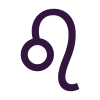 Leo: Strength
A woman bends over a lion and holds its jaws, calm and unhurried, with an infinity sign floating above her head. The lion is Leo's own animal, and Leo is fixed fire: expression, warmth, recognition. The strength on this card is warmth and steady courage, since she calms the lion with her hands. That's Leo at its best, a big heart that can face something fierce, in herself or in a room, by staying warm. It's also one of the two cards Waite renumbered.
 Virgo: the Hermit
Your coworker has the Hermit as her phone background, and when you tell her it's the Virgo card, she says that explains a lot about her inbox. On a mountain peak, the Hermit holds a staff in one hand and a lit lantern in the other, with a six-pointed star inside it. Virgo is mutable earth: discernment, refinement, practical service. The card is patient study done quietly, a light held up for the next step and no further, and knowledge that turns useful once it's offered to whoever is climbing behind. Its edge is going quiet for so long that nobody knows how much she knows.
 Libra: Justice
Why does Justice need a sword when it already has scales? Your Libra partner picks the card out of your deck and asks exactly that, and for once you have the answer. A seated figure holds golden scales in one hand and the sword in the other, and the card stands for objectivity, accountability, and balance. The scales are Libra's own symbol, and Libra is cardinal air: balance, negotiation, relationship. The scales do the weighing. The sword is the part people forget, the decision once the weighing is done, and for a sign that could weigh forever, it's a reminder that fairness ends in a choice.
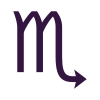 Scorpio: Death
Start with what it means: change and endings. A skeleton on horseback carries a banner with a rose, a fallen king lies in its path, and behind them the sun is rising between two towers. Writers on the card read it as major change, a habit, a chapter, or a way of seeing coming to a close so something new can start, and almost never as anyone's actual death; some decks leave the card unnamed. Scorpio is fixed water: intensity, privacy, depth. When Scorpio lets go of something, it lets go completely and comes out the other side different. That rising sun is the point of the card.
 Sagittarius: Temperance
Temperance began as the standard picture of a virtue: mixing wine with water in the right measure. Here a winged angel stands with one foot on land and one in water, pouring liquid from one cup into another, with a path behind leading toward a crown. Waite gave its meanings as moderation and management. Sagittarius is mutable fire, built on exploration, conviction, and wider perspective, and this is how a Sagittarius turns experience into a philosophy of her own: one foot in each world like a traveler, blending what she's learned everywhere while the path runs toward a far goal. It also hands her fire what it most needs, the right measure, so the enthusiasm lasts the whole trip.
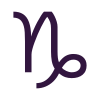 Capricorn: the Devil
A horned figure with bat wings crouches on a pedestal above two chained figures. In the Major Arcana's story, the card stands for material attachment and complacency. Capricorn is cardinal earth: structure, responsibility, long-term effort. Capricorn understands the material world better than any sign, and the Devil shows the cost of everything she builds. The job, the status, and the five-year plan can become the very chains that hold her if she forgets why she built them. So the card hands a Capricorn one question: what am I holding on to, and do I still want it?
 Aquarius: the Star
You've had the Star propped against your desk lamp for months because you liked the picture, and then you find out it's the card for your Aquarius Moon. A woman kneels with one foot in the water and one on land, pouring from two jugs, one into the water and one onto the land, under one large star and seven small ones. The card stands for hope and bright prospects. Aquarius is the water-bearer, though it's an air sign despite the symbol, and its fixed air runs on independence, ideas, and collective concerns. The Star is the water-bearer pouring for everyone: hope offered to the wider world, a better future shared freely.
 Pisces: the Moon
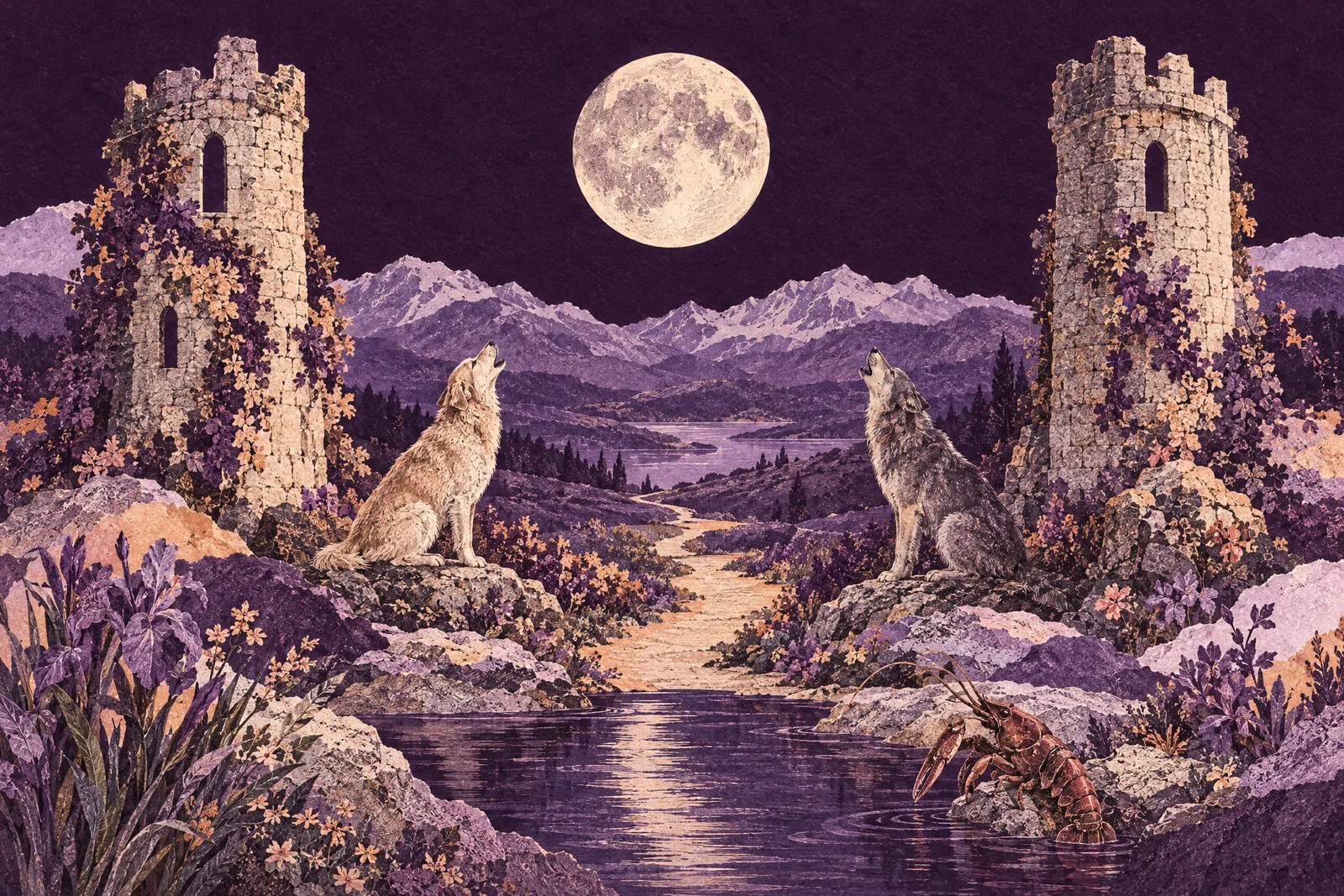
By moonlight, it's hard to tell what's real, and this card is built on that feeling. In a night scene, the Moon shines above two pillars, a dog and a wolf howl at it, and a crayfish climbs out of the water. Waite read the card as the life of the imagination. Pisces is mutable water: imagination, empathy, permeability. The Moon is the dreamlike, in-between place where nothing is quite clear yet and imagination does its best work, and that crayfish coming up out of the water puts Pisces's ocean right in the picture. It's also a card about checking a dream in daylight before acting on it.
Why Strength and Justice swapped numbers
In older decks, Justice is the eighth card and Strength the eleventh. Waite switched them to fit the astrological correspondences the Golden Dawn taught, so Strength (VIII) goes with Leo and Justice (XI) with Libra.
With that swap, the sign cards come up in zodiac order when you read the trumps by number: the Emperor (IV), the Hierophant (V), the Lovers (VI), the Chariot (VII), Strength (VIII), the Hermit (IX), Justice (XI), Death (XIII), Temperance (XIV), the Devil (XV), the Star (XVII), and the Moon (XVIII). That's Aries through Pisces, with only the Wheel of Fortune (X), the Hanged Man (XII), and the Tower (XVI) tucked in between.
The Sun card, the Moon card, and your card
Ten of the twenty-two Major Arcana aren't sign cards, and two of them are easy to mix up with your chart. The Moon card belongs to Pisces, so it's your Moon sign's card only if your Moon is in Pisces. The Sun card (XIX) isn't a sign card at all. Your Sun sign's card, your Moon sign's card, and your rising sign's card are each the one listed under that sign.
Your Sun, Moon, and rising cards: three questions
Find your three cards in the deck by sign, or look them up, and set them where you can see them. Nothing gets shuffled or drawn; you're choosing each one by its sign. Then answer one question per picture, in a few lines each.
- Your Sun sign's card: Which detail in this picture looks like something I'm working toward right now?
- Your Moon sign's card: If this card were propped by my bed, what would it remind me I need after a hard day?
- Your rising sign's card: Which part of this picture would a stranger notice in me first, and which part would they miss?
Your rising card needs an accurate birth time, so without one, work with two cards. If two of your signs match, one card does both jobs and gets both questions.
Lay out the whole row
If you have the deck, try one last thing. Lay the twelve sign cards on the floor in number order, the Emperor first and the Moon last, and watch the zodiac run from Aries to Pisces in front of you. Then find your own three cards in the row and see where each one sits, a deliberate portrait of its sign in a sequence that's been waiting in the deck since 1909.
Wikipedia, Tarot, sections 'Playing cards' and 'Cartomancy.' ↩︎
Wikipedia, Hermetic Order of the Golden Dawn, lead and 'Founding of the First Temple.' ↩︎
Wikipedia, Rider–Waite Tarot, lead, 'Publication,' and 'Overview.' ↩︎