Zodiac Guides
The Celtic Tree Zodiac: Your Tree Sign and Where It Really Comes From
The Celtic tree zodiac isn't ancient Druid lore. It grew out of a 1948 tree calendar by the poet Robert Graves. Here's the story and what each tree means.
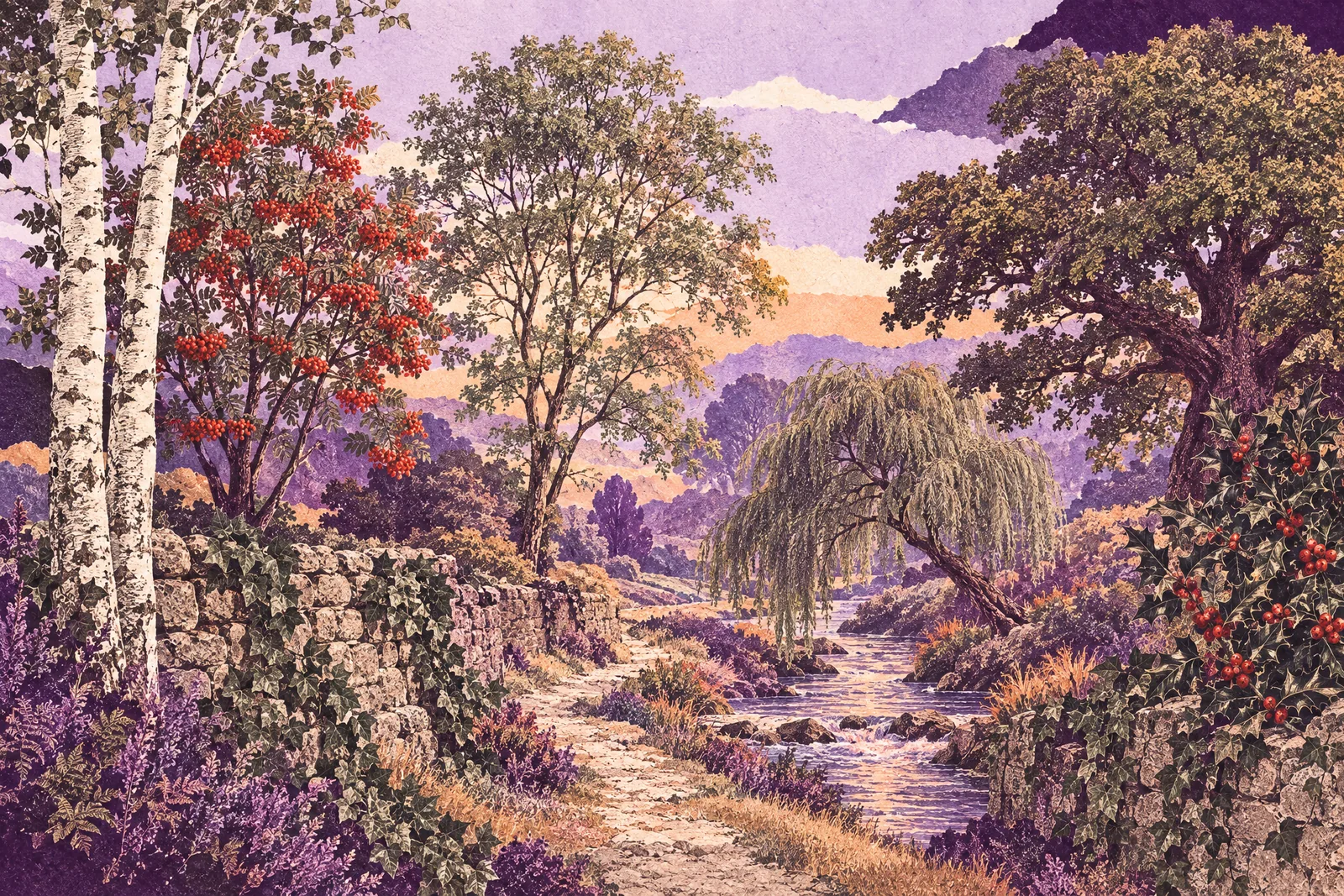
You found your birthday on one of those tree charts, landed on willow, and felt oddly, specifically understood by a tree. Here's the fun part: that feeling is real, and the system that gave you willow dates only to 1948. Robert Graves published his tree calendar in 1948, in a sprawling book of poetic myth called The White Goddess: A Historical Grammar of Poetic Myth. [1] It is not ancient Druid wisdom. It is something maybe better: a poet looked at a medieval alphabet, saw trees in the letter names, and built thirteen months of botanical character so vivid that people have been living inside them for decades. You can love it without the backstory. You can also love it with the backstory, because the story is genuinely good.
Where the tree zodiac really comes from
In The White Goddess, Graves argued that the names of the ogham letters contained a calendar; his "tree calendar" has no relation to any historical Celtic calendar. [1:1] He was an English poet and novelist, best known for the novel I, Claudius (1934), and The White Goddess was less a history than a poet's wild, gorgeous theory, written the way poets write when they're onto something they can't quite prove. He took the letter order proposed by the ogham scholar R. A. S. Macalister and built what Graves called a "seasonal calendar of tree magic"; his theories have been discredited by modern scholars, including Macalister himself, but were taken up by neopagan and New Age writers. [2]
And those writers did something delightful. They turned thirteen months of tree-names into birth signs, gave each tree a personality sketch, and posted the whole thing online. Your willow is a twentieth-century invention, and the poet who made it probably would have found that funny.
Ogham, the alphabet behind the trees
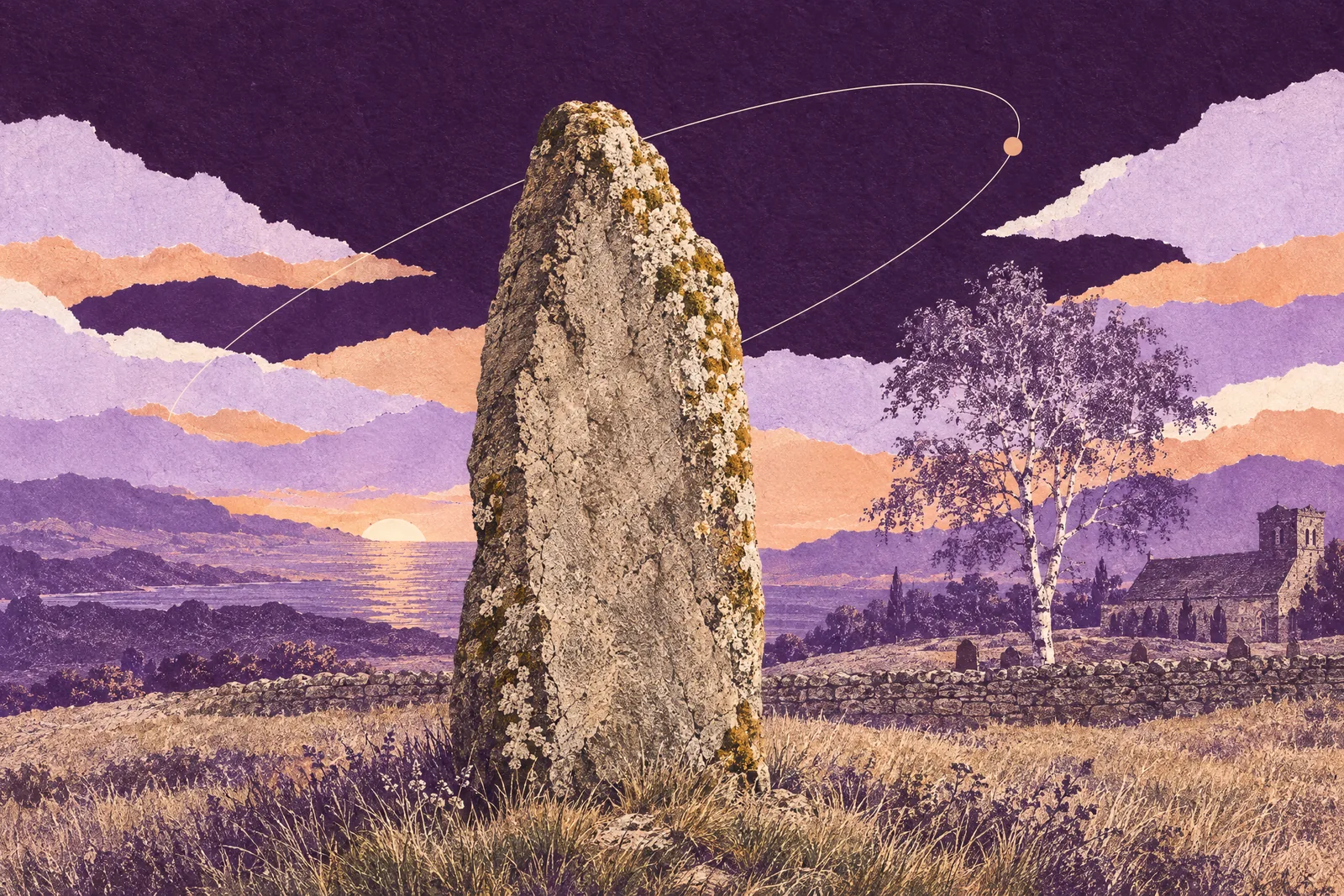
Ogham is an early medieval alphabet used mainly to write early Irish; roughly 400 inscriptions survive on stone monuments in Ireland and western Britain. It looks like a series of short strokes cut along a central line, more like a tally mark than a letter. You see the stones in fields and churchyards, tall and weathered, with the writing running up their edges.
Medieval Irish manuscripts interpret the ogham letter names as trees and shrubs, but according to the ogham scholar Damian McManus, at most eight of the twenty letter names are actually tree names (only birch, alder, willow, oak, and hazel clearly so), and the "tree alphabet" idea dates to the Old Irish period (around the tenth century), after the letters were originally named. [2:1] The rest? Scholars argue about them. Graves didn't much care. He saw a tree for every letter, and that was enough for him.
How the tree calendar works
The tree calendar's dates as devised by Graves: Birch December 24 to January 20, Rowan January 21 to February 17, Ash February 18 to March 17, Alder March 18 to April 14, Willow April 15 to May 12, Hawthorn May 13 to June 9, Oak June 10 to July 7, Holly July 8 to August 4, Hazel August 5 to September 1, Vine September 2 to September 29, Ivy September 30 to October 27, Reed October 28 to November 24, Elder November 25 to December 22; December 23 is not assigned to any tree. [3]
Thirteen months of 28 days make 364 days, and the leftover December 23 belongs to no tree. If your birthday falls on December 23, you are the one day a year outside the forest, and honestly, that's the best result possible. The year starts with Birch on December 24, and the dates are fixed. The Birch month opens on the same day every year, which is one real difference from Western signs, whose start dates wobble with the Sun.
One wrinkle: some published versions of the calendar end Reed on November 23 and run Elder from November 24 to December 23. If your birthday lands on one of those edge dates, you might see it listed under either tree. Neither list is more "correct." Pick the one that fits you and move on.
The winter and spring trees
Birch, December 24 to January 20. Pale, papery bark that almost glows in a bare winter wood. The first tree of the year and the one that looks newest. You're the person who opens a fresh notebook and actually fills it within the week. Quiet resolve, no fanfare, just the stubborn start again.
Rowan, January 21 to February 17. A slender tree whose scarlet berries hang on into the gray end of winter, refusing to drop. You're original and a little ahead of the room, the bright color in a dull season. Your best friend is a Rowan, and everyone who knows her agrees: she pitched the thing everyone copied six months later and simply never explained why.
Ash, February 18 to March 17. Tall and airy, with a light, open canopy that lets the sky through. You're imaginative and free-thinking, head comfortably in the clouds and roots in solid ground, happiest with room to stretch. Lock you in a small room for a week and you will compose a novel in your head and lose track of time.
Alder, March 18 to April 14. A tree of riverbanks and wet ground, standing where the path meets the water. You're confident and practical, the pathfinder who steps across first and then holds out a hand. Someone's crying in a parking lot and you're already there, not asking questions, just opening the car door.
Willow, April 15 to May 12. Long branches that sweep down toward the water and bend flat in a storm without snapping. You're sensitive and observant, with a long memory that you'd rather not discuss. You give way in the moment, let the argument pass, and come back to your own shape an hour later. You still remember what they said in 2019, in detail.
The summer trees
Hawthorn, May 13 to June 9. A small, thorny tree that covers itself in white blossom in late spring, all composed and a little prickly on the surface. There is a riot going on underneath. People only discover it once they get close enough to push past the thorns, and by then you've decided whether to let them in.
Oak, June 10 to July 7. Broad, slow-growing, long-lived, with a canopy wide enough to stand under in the rain. You're steady and protective, the one everyone ends up sheltering near. Generous with shade, in no hurry to change, and quietly offended when people mistake your patience for passivity.
Holly, July 8 to August 4. Glossy, spiky-edged evergreen leaves that look the same in midsummer as in the dead of winter. You're ambitious and polished, determined to keep standing out whatever the season. Proud in a quiet way. You don't announce your wins. You just look immaculate while everyone else scrambles.
Hazel, August 5 to September 1. Flexible branches and nuts packed tight in hard shells. You're clever and curious, a collector of facts and stories who cracks them open at exactly the right moment. Three dinner parties from now you'll drop the perfect anecdote into conversation, land it, and pretend you were thinking about the salad.
The autumn trees
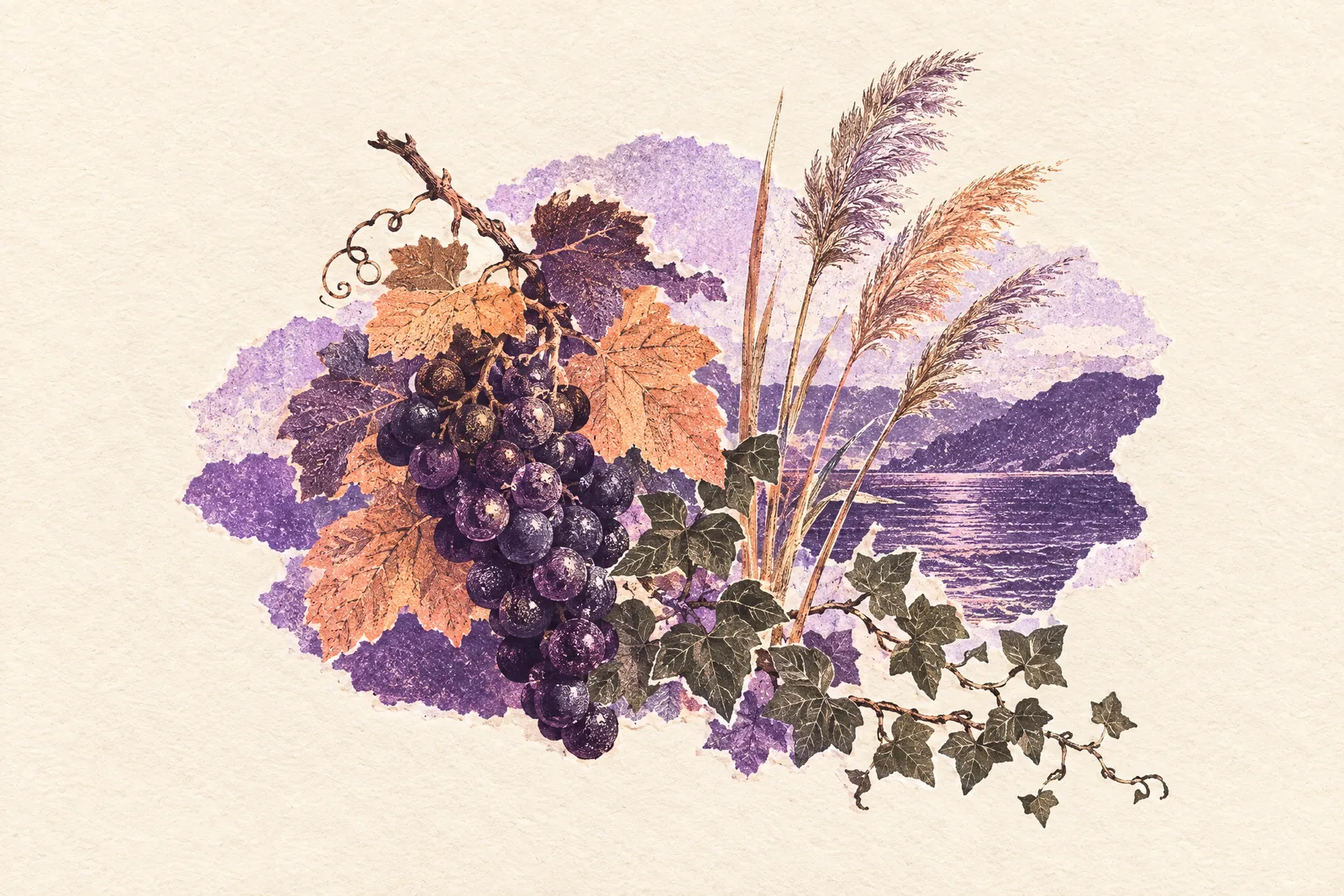
Vine, September 2 to September 29. A climber reaching toward the light along more than one path, heavy with fruit at harvest time. You're refined and sensual, alive to good things, and you can see both sides of an argument so clearly that choosing one takes a while. Your friends text you when they're indecisive, because you'll actually weigh it instead of picking for them.
Ivy, September 30 to October 27. An evergreen climber that grips and keeps going, up walls, over fences, straight through winter. You're loyal and resilient, a finder of footholds, still there when the fair-weather friends have moved on. You don't quit things. You don't quit people. Your friends have noticed.
Reed, October 28 to November 24. Hollow stems at the water's edge, swaying and whispering, rooted in what's under the surface. You're drawn to hidden things, a sharp listener and a trustworthy keeper of secrets. Someone tells you something huge at a party, and you carry it out the door and out of the building without a flicker.
Elder, November 25 to December 22. A quick-growing, shrubby tree, bare and twiggy in its month but covered in wide, flat heads of cream flowers in early summer. The last tree before the leftover day. You're freedom-loving and restless, a bit untamed, always ready for the next adventure. You can't explain why you booked the trip. You just needed to go.
Your tree and your zodiac sign
Tree months follow the calendar; your Western Sun sign follows the Sun, whose sign changes fall around the 19th to the 23rd. So the two overlap unevenly. One Sun sign can hold parts of two trees, and a tree month can stretch across two Sun signs. Most of Scorpio season falls inside the Reed month, and noticing Scorpio's instinct for privacy sitting next to Reed's talent for secret-keeping is a small, fun pairing. But that's a coincidence of dates, not a mapping. There's no table here. Your tree doesn't correct your sign, doesn't refine your rising, doesn't tell you anything your natal chart missed.
Read the tree as a second portrait, lighter and more poetic, the way you might read a horoscope in a magazine. A woodsy addendum you can enjoy without it changing a single line of your birth chart. Your tree doesn't need to be true in the way your Sun sign is true. It just needs to be fun, and specific enough that you think, yes, that's how I actually bend in a storm.
Go find one
You don't need a crystal or a candle or a guided meditation. You just need a walk. Go find a real specimen of your tree this season. Press a Rowan leaf between the pages of a book you haven't finished. Stand under an oak in the rain and let it do its thing over your head. Notice how a Willow bends all the way to the ground and snaps back. Hang a print of your tree in the living room, or look up a friend's tree and send it to her with no explanation. She'll get it.
Wikipedia, The White Goddess, introduction and 'Celtic tree calendar.' ↩︎ ↩︎
Wikipedia, Ogham, sections on the letter names and on Neopaganism. ↩︎ ↩︎
Jones' Celtic Encyclopedia, Celtic Tree Calendar, tree month list. ↩︎